
Terrible Teaching Tips - The Antiblog

We often strive to be the best, but what happens if we were instead to focus on being the absolute worst teacher that we can be. You see, it’s not just a case of ignorance, we need to throw in some arrogance and stubbornness into the mix. Regardless of who we are teaching, these are some simple principles (those terrible teaching tips) that we can employ to really shut down the learning.
One and Done
Tell them once and move on. You know it, so they should be able to take everything on you say the first time. Don’t revisit; The Forgetting Curve isn’t really a thing, it’s just laziness on the learners part. They should be able to recall information effortlessly after a single exposure. Expect immediate mastery; anything less suggests they weren't paying enough attention.That means you can hand them a 50-page PDF and walk away. Trust in the Illusion of Fluency—if they’ve read it, they can recognise it, then they must know it. Avoid testing or 60-second "brain dumps" at all costs. It’s a waste of time.

Ignore Prior Learning
Get straight to the difficult stuff. Don’t worry about what they have done or not done previously; prior knowledge and schema just get in the way of true learning. Thankfully, brains are like sponges; you keep pouring water on them, and they keep absorbing without limit. There's no need to scaffold or connect new information to existing understanding; just present the facts. When giving instructions, think of grouping these in a minimum of 10 at a time, ideally more.
And all that stuff about intrinsic loading and the inherent difficulty of the material overloading working memory? Nonsense, just keep firing all of the details, explanations, and as much new jargon in as quickly as possible. Quantity over clarity is the key. Never pause for questions, and certainly don't differentiate for individual needs.
Remember, square pegs fit into round holes with enough effort.
Focus On Entertainment, Not Information
Embrace the split attention effect - create as much distance between explanations and diagrams as possible or better yet, include funny memes or images that are completely unrelated to the topic. The more movement they have, the better. Prioritise entertainment and a laugh, this does not distract from the learning in any way. You should aim for maximum cognitive distraction.
John Sweller didn’t know what he was talking about when he was discussing extraneous load - he just didn’t understand how to create a killer presentation. His ideas about minimising irrelevant information are outdated and frankly, a bit dull. A truly engaging presentation thrives on high levels of irrelevant visual stimuli.
Irrelevant Stories
Make sure that the learner knows all about your expertise, even if it’s not related to the task at hand. For example, mention your proficiency in competitive thumb wrestling, your encyclopaedic knowledge of 1980s Bulgarian pop music, and your gold-star ranking in virtual cheese-making simulations. It’s important that they understand how good you are at doing everything, most importantly teaching and that if they’re not learning it really is their fault, not yours, they just need to take after you more.
Assume You Know Best
Use should as often as you can in your teaching, they should listen to you, they should do exactly as you say, when they fail it’s because they didn’t listen. Prescriptive assumptions don’t need to be tested, they just need to be listened to. They should pay attention, you are the teacher after all. And if you want to dive deeper in assumptions, throw some causal ones in as well, the “if / thens”. If they do as you say, the will get the result you promise.
And if they don't, it's not because of your teaching, it's because they weren't listening to what you told them they should do.
Consistent Contradiction
Inconsistency and contradiction should feature strongly in your teaching. In fact you should be consistent with your contradictions.
Make sure you focus on only one thing and nothing else. Hit them really hard with massed practice, don’t space it out. They will be masters in no time, and the research that suggests this is not as effective as prioritising strategies like spaced repetition and interleaving, pure nonsense. The goal is sheer repetition of a single concept BUT don't repeat.
Stretch out those sessions for as long as possible on one thing with no breaks. The brain will be forced to take this on through sheer exhaustion. The learner's discomfort is a sign of intense focus, which we know is the only way to learn. After this gruelling session, ignore it completely; they have mastered it and you can move on confidently to the next singular topic.

Read While They Read
In presentations, it’s important to give lots of reading, and then talk over the top of this. It's helpful to read what you have on the slide as well - some might call this the redundancy effect, you can call this double efficiency.
"Furthermore, before proceeding with didactic deployment, internalise the foundational construct of 'Cognitive Selectivity': the target audience's limited-capacity attentional mechanism can only achieve optimal data throughput via a solitary sensory modality within a specific temporal unit. The simultaneous presentation of congruent auditory and isomorphic textual stimuli constitutes a 'Bimodal Attention Split' scenario, resulting in a demonstrable decrement in processing efficiency and precipitating an 'Information Saturation Error'. Therefore, maximal informational density is the operative paradigm!"
Ask lots of questions as you have them watch a video. Brains can multitask and focus on multiple information streams simultaneously.
Be Relentless
Don't allow any gaps or moments. Whilst Barbara Oakley talks about the diffuse state of being where space helps our brain consolidate learning, you don't have time for that. Your focus must be on speed and volume. You just need to get all of the information out there as quickly as possible.
Squash the Pomodoro Method - 25 minutes of focus and 5 minute break. That’s 10 minutes per hour that is being wasted.
If you are relentless enough in your delivery, rushing through every topic, then it will all stick. Just remember not to repeat anything or offer clarification. They definitely got it the first time, and any hesitation on your part will slow down the information flow
Make Learning Hard
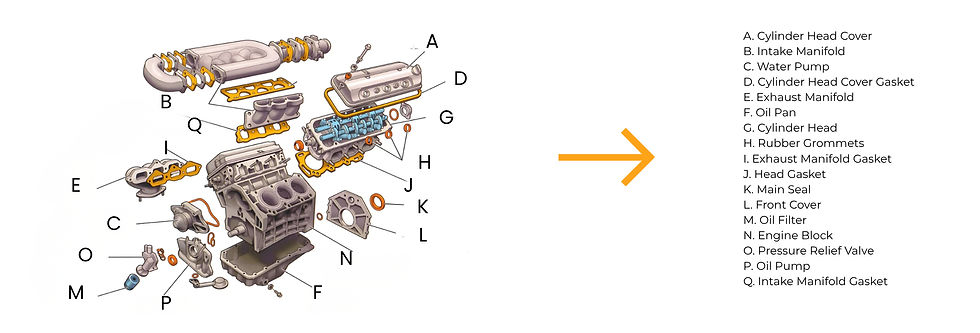
The harder the brain works, the more it learns so hide away labels from diagrams. Desirable difficulties tells us that learning shouldn’t be easy, so make it as hard as possible, borderline impossible.
If motivation is waning, keep pushing and increasing that difficulty until it is completely gone. Better yet, introduce unnecessary complexity that has nothing to do with the actual learning objective. The aim is to create an insurmountable wall of difficulty.
You Are The Expert
And remember, you are the expert, you know what's best and what worked for you is certainly what they should be doing as well. Make sure that you emphasise this as regularly as possible. Sure there is a thing called expert bias where you often forget the experience of being a beginner or novice, making it difficult to teach someone who is less experienced because you can no longer relate to the initial difficulties of the learning process. This doesn't apply to you, of course, and the fact that they're not getting it is all to do with effort, and not your teaching methods (I mean, it worked for you right?). You are, after all, the authority in the room, and their lack of progress is a clear indication of their own shortcomings.
Michael.


Comments