
Practical Steps Through Effective Learning Strategies

Updated: Feb 21
Learning is a lifelong journey, and in today's fast-paced world, mastering effective learning strategies is more crucial than ever. Whether you are a student, a professional, or someone simply looking to expand your knowledge, understanding how to learn effectively can make a significant difference in your success. In this post, I will challenge 3 persistent learning myths, explore practical steps that can enhance both yours and others learning experience, making it more enjoyable and productive.

Do You Really Have A Learning Style?
Before diving into specific strategies, it's essential to recognise that everyone learns differently. Previously, this has been thought of that everyone has different learning style such as visual, auditory, or kinaesthetic. The science negates this. We often mistake a preference for a style and this can have a negative effect on your learning. An over reliance on one style limits connections across the brain, leading to inefficient approaches to learning.

Instead, an approach to learning that supports differentiation (interacting with information in different ways) provides a more in-depth approach and stronger outcomes.
For Personal Learning - this means being honest about how much learning is really occurring through watching those tutorial videos, or why the number of books you have read doesn't seem to equate to the actual progress you have made in your understanding. Take the opportunity to see what you can remember 1 hour after reading, or before picking up the book again, write down 5 key points that have been covered previously. This takes you from a passive approach to active interaction.
When Helping Others - this means that finding ways to vary the learning experience will provide more meaningful opportunities for engagement with the desired learning. Rather than simply reading a manual or watching an instructional video, include opportunities for discussion, testing, and application of the knowledge in a relevant context.
Getting goal setting right
Setting clear and achievable goals is a fundamental step in effective learning. Goals provide direction and motivation, helping you stay focused on what you want to achieve.
The even better way of staying engaged is to see progress.
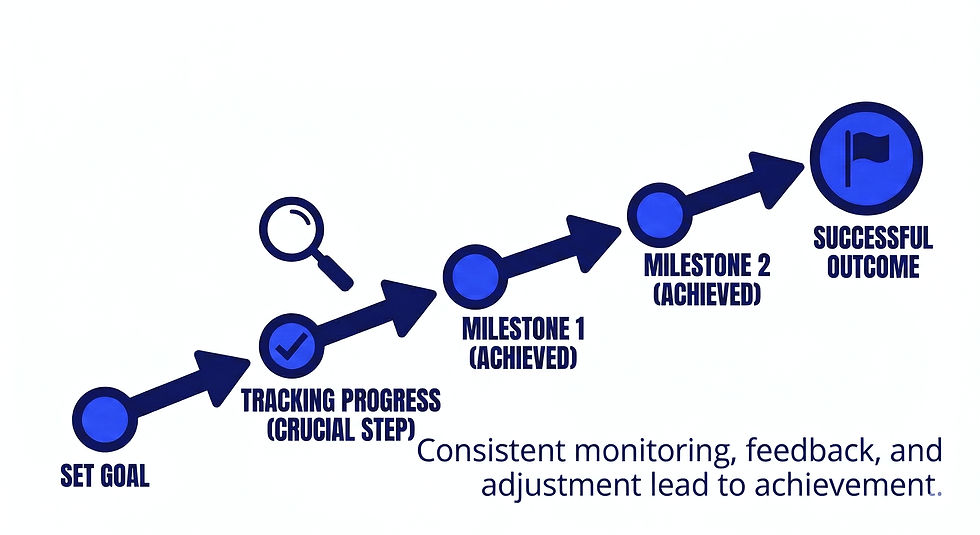
S.M.A.R.T is the standard formula for goal setting, Specific, Measurable, Achievable, Relevant, Timely. This can be adapted to S.M.A.R.T.R - with an emphasis on the added R - Realistic. A goal can theoretically satisfy all of the initial criteria, but simply may not be practical in a real world context. The final measure allows an evaluation to ensure that we overcome those obstacles before beginning - possible and probable are two different outcomes.
It is also important to recognise that personal goal setting is very different to setting goals for others. For instance, having the ability to set your own sales targets is different to someone else who has a budget set for them. The level of autonomy in the goal setting process has a direct effect on the level of engagement in the process.
The S.M.A.R.T Framework
Be Specific: Instead of saying, "I want to learn Spanish," specify, "I want to learn 20 new Spanish words by the end of the month." You can take this a step further by being explicit about what the 20 words will entail "I want to learn 10 new Spanish phrases related to ordering food at a restaurant". This now gives a specific purpose to your goal.
Make Them Measurable: Ensure you can track your progress. For example, "I will use active recall through recording myself both speaking and writing down these phrases from memory". This will be further enhanced through using spaced repetition, testing again after 24 hours and again at 1 week.
It Must Be Achievable - The scope of the goal is a key aspect here, and if you find that 10 phrases is too many initially, you can feel comfortable to lower this number. The intention to revise this target is not to undermine your goal, but to ensure your brain views this in a manageable way.
Relevant - It's easier to define a clear purpose to the goal if you are travelling to a Spanish speaking country. When this exists for personal interest, it can be more difficult to find the opportunities to practise this. When there is a clearly defined goal, but lacks a specific context it is more important that spaced repetition is utilised. This will allow the brain to see that this is important to commit to long term memory, and help this embed for a time when it is likely to be used.
Set a Timeline: Give yourself a deadline. Not any random date but one that has meaning to you. This creates a sense of urgency and helps you stay committed. Birthdays, anniversaries, public holidays are good examples of this. If this is a recurring goal, then ensure that you allocate time in advance as to what the new parameters will be for this to flow on seamlessly.
Realistic: A goal can be achievable, but is it realistic that you will commit to this? Have you considered all of the factors in your daily routine, or upcoming events and schedules that might impact this? It might even be the case that you need to give up another goal or activity to make room for this. This ties to tracking your progress, what is realistically happening that can allow you to adapt where required. Ensure you spend the time to be honest as to what lies ahead.
Environment or method?

Your environment plays a crucial role in how effectively you learn. A well-organised and distraction-free space can enhance your focus and retention. But this isn't always as easy to recreate as we would like. You will consistently hear that this requires a quiet space, good lighting, and even inspirational quotes to motivate you - but does it really make a difference? This rules out many places where you can still be productive if you have the right tactics. Often it's not about the space itself, it's about convincing your brain that what you are about to do is important and requires focus. And these are three methods that allow you to overcome that environment.
The Pomodoro Method
By setting a timer for a specific period of time (25 minutes is a good target), you can assist your brain into greater focus despite other distractions. At the end of the 25 minutes, enforce a 5 minute break even if you are mid sentence. By leaving the session open, it is easier to return to this and pick up where you left off. It becomes easy to stack these sessions for greater progress
Flash Cards (and the micro-learning opportunity)
There are many apps that are portable that allow you to work through your own or pre-made sets of cards. This is further enhanced when you create your own physical cards and have these readily available. Having these available while you brush your teeth allows you to quickly recap on 2-3 ideas. This will have a profound cumulative effect over time when you are consistent in your approach.
Match The Environmental Deficit
The key to focus is to ensure that your brain doesn't compete with the space you are working in to free up working memory for the task at hand. You will know the difficulty of holding a conversation in a busy reverberant hall and how taxing this is. Therefore you switch your mode of operation to "free up" a different mode of processing. If it is loud, you find visual methods to process the learning. If there are constant interruptions, then you opt for smaller chunks of learning at any one time. By taking note of what you are up against, you can still be productive in your learning. Note: this is different to learning styles, as you are matching the mode of learning to the reality of the environment you are in.
Conclusion - The Learning Strategies
Effective learning is a multifaceted process that requires understanding your unique style, setting clear goals, creating a conducive environment, and actively engaging with the material. By incorporating these practical strategies into your learning routine, you can enhance both yours and others ability to absorb and retain information. Remember, learning is a journey, not a destination. Embrace the process, stay curious, and keep striving for growth.
As you embark on your learning journey, consider which strategies resonate with you and start implementing them today. The path to effective learning is within your reach.
Michael.


Comments